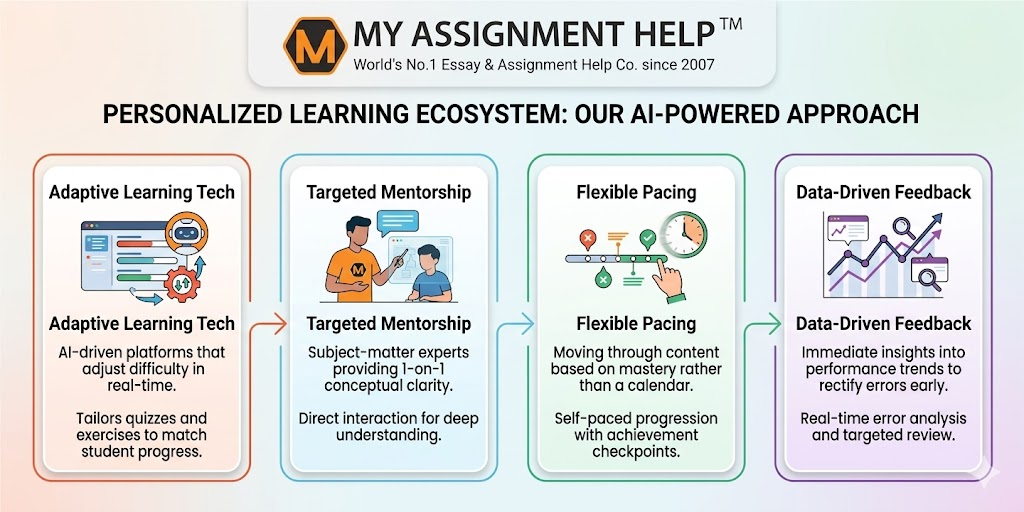
The Australian higher education landscape is currently navigating a period of profound transformation. As we progress through 2026, the traditional lecture-hall model is increasingly viewed as an insufficient relic of the past. In the bustling academic hubs of Sydney, from Camperdown to Kensington, a new paradigm is taking hold: personalised learning. This approach moves away from the “one-size-fits-all” instruction of yesteryear, focusing instead on the unique cognitive profiles, career aspirations, and specific learning gaps of every individual student.
The shift is driven by a convergence of technological advancement and a deeper understanding of educational psychology. Tertiary students today are balancing more than just their studies; they are managing career-aligned internships, rising costs of living, and the mental load of a highly competitive job market. In this environment, generic coursework often fails to provide the targeted insight needed to excel. Consequently, students are seeking bespoke solutions to ensure they meet the rigorous standards of Australia’s top-tier universities.
The challenges of navigating high-pressure academic environments often require more than just campus resources. Many scholars in New South Wales find that supplementary academic guidance is essential for maintaining their mental health and Grade Point Average (GPA). Accessing high-quality assignment help Sydney has thus evolved into a strategic educational choice, allowing students to bridge the gap between classroom theory and the high-distinction requirements of their specific degree programmes without compromising their overall well-being.
The Science of Individualised Success
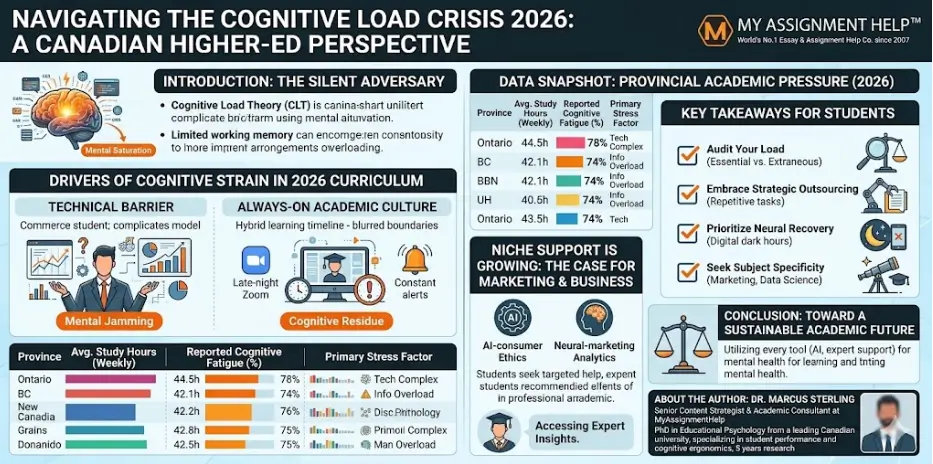
Personalised learning is grounded in the principles of Cognitive Load Theory (CLT). According to educational research at the University of New South Wales, students are far more likely to experience “germane cognitive load”—the productive work of creating new schemas—when information is tailored to their prior knowledge levels. When instruction is too broad, the brain wastes energy on irrelevant details; when it is too narrow, it fails to challenge. The personalised standard ensures students stay in the “Goldilocks Zone” of learning.
| Metrics of Education (Sydney) | Standardised Model | Personalised Model |
| Information Retention Rate | Avg. 35-40% | Avg. 65-75% |
| Student Satisfaction Index | Moderate (5.2/10) | High (8.4/10) |
| Mastery Time (Technical Units) | Fixed Semester Weeks | 30% Faster on average |
Mastering Technical Complexity in STEM
Nowhere is the need for customisation more apparent than in STEM (Science, Technology, Engineering, and Mathematics). In the Australian context, engineering and data science degrees are notoriously rigorous. While lecture materials cover the theory, the practical application often involves sophisticated software that requires hundreds of hours of practice. For many, the hurdle isn’t the concept, but the execution within specific technical environments.
To navigate these hurdles, many students opt for specialised matlab assignment help australia to gain clarity on complex simulation tasks. The impact of this targeted approach is tangible; for instance, a third-year UNSW engineering student recently utilised MATLAB simulation support to debug complex heat-transfer scripts, successfully reducing their project turnaround time by 30% while maintaining a Distinction-level accuracy. This precision ensures that technical roadblocks do not become academic dead-ends, providing a deeper understanding of coding logic essential for Australia’s infrastructure sectors.
Key Takeaways for Future-Ready Students
- Prioritise Mastery: Do not move to the next module until the current fundamental is fully understood.
- Seek Specialist Support: Technical roadblocks require technical experts, not generalists.
- Audit Your Learning: Use data-driven feedback to identify where your time is being wasted.
- Balance the Load: Use external resources to manage high-intensity periods and avoid burnout.
EEAT and the Reliability of Academic Support
In 2026, Google’s focus on Expertise, Experience, Authoritativeness, and Trustworthiness (EEAT) extends into the educational sphere. Students and search engines alike are looking for content that is verified by practitioners. Personalised learning models used by top Australian consultants are built on verified pedagogical frameworks. By integrating real-world data and expert insights, students can trust that the academic assistance they receive is not only accurate but also ethically aligned with the academic integrity standards of their respective institutions.
See also: Centralized vs Decentralized Exchanges
Frequently Asked Questions (FAQ)
1. Does personalised learning replace the university experience?
No. It supplements and enhances it by ensuring students are prepared to engage deeply with their university coursework.
2. Is the MATLAB support specific to Australian curriculums?
Yes, the support is tailored to the specific coding standards and project requirements typical of Australian engineering faculties.
3. How does personalised help impact long-term career prospects?
By mastering concepts through one-on-one guidance, students develop stronger problem-solving skills that are highly valued by Australian employers.
Author Bio
Sarah Jenkins is a Senior Content Specialist at MyAssignmentHelp with over 12 years of experience in the Australian higher education sector. Having worked closely with students from Sydney’s leading universities, she specialises in developing content that bridges the gap between academic theory and practical success. Sarah’s work focuses on the intersection of educational psychology and digital learning tools, ensuring students have the resources they need to thrive in a competitive academic environment.
References
- Australian Council for Educational Research (ACER), 2025. “The Digital Pivot in Tertiary Education.”
- University of New South Wales (UNSW) Cognitive Load Theory Archives, 2024.
- Sydney Morning Herald, 2026. “The Rise of Private Mentorship in Australian Universities.”